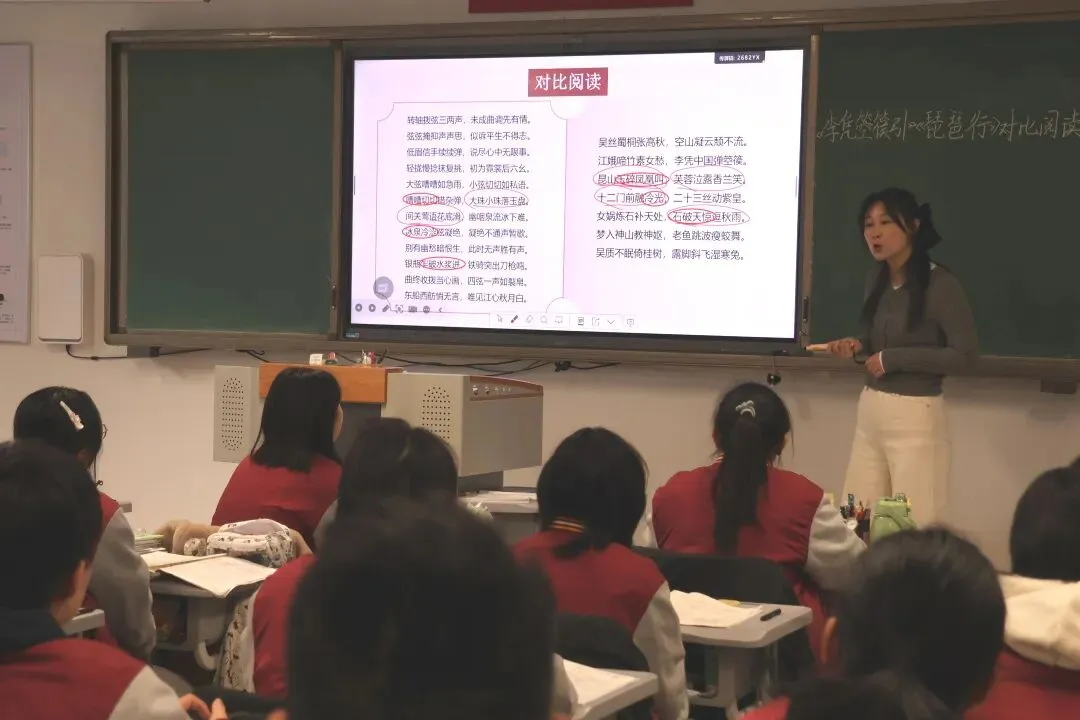
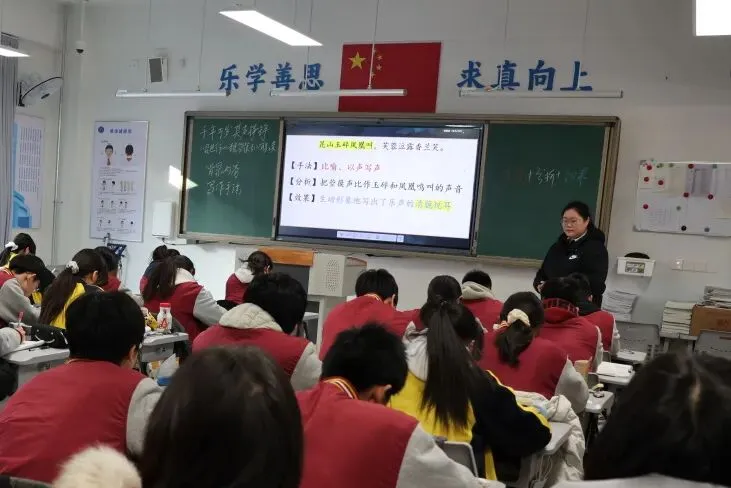
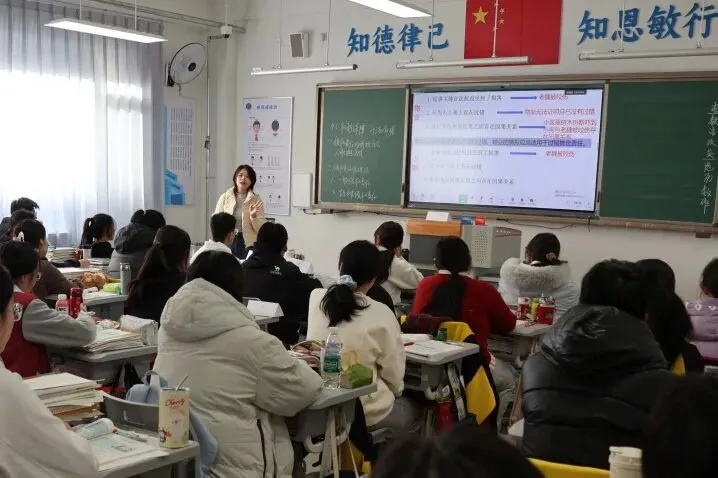
耿萍萍老师以“以乐传情,殊途同归”为主线,串联两首古诗,通过分层引导,让学生领略诗词魅力并掌握对比阅读答题技巧。姜彦均老师以“声”为引,溯源古典诗词中的“铮铮之声”,在对比中深悟文化底蕴。
Teacher Geng Pingping took "Conveying Emotions Through Rhythm, Achieving the Same Goal via Different Paths" as the main thread, connecting two ancient poems. With hierarchical guidance, she enabled students to appreciate the charm of poetry and master the skills of answering comparative reading questions. Teacher Jiang Yanjun used "sounds" as the guide to trace the "resolute and forceful voices" in classical poetry, helping students deeply comprehend the cultural connotations through comparison.
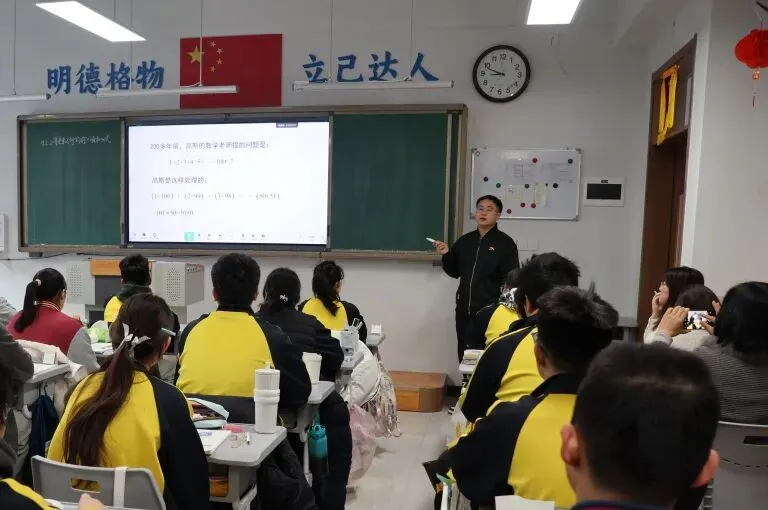
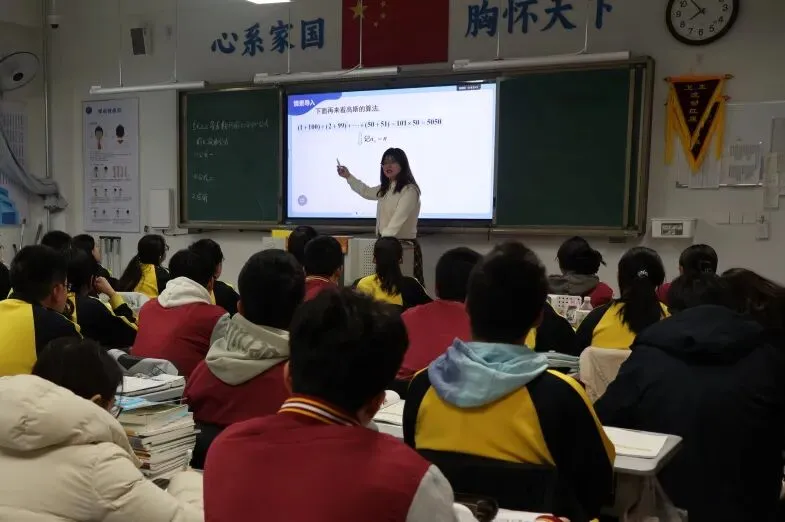
刘春晓老师从高斯求和切入,引导学生自主推导等差数列前n项和公式,强化逻辑思维。王欢老师以实践为导向,通过例题精讲与小组探究,侧重公式灵活运用,二者实现“探究”与“应用”的教学互补。
Teacher Liu Chunxiao started with Gauss Summation, guiding students to independently deduce the formula for the sum of the first in terms of an arithmetic sequence and strengthen their logical thinking. Teacher Wang Huan adopted a practice-oriented approach, focusing on the flexible application of formulas through intensive example explanations and group inquiry activities. Together, they achieved the teaching complementarity between "inquiry" and "application".
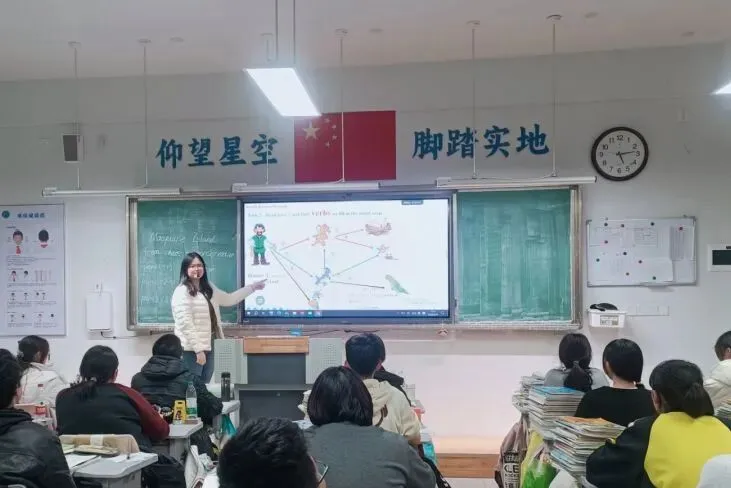
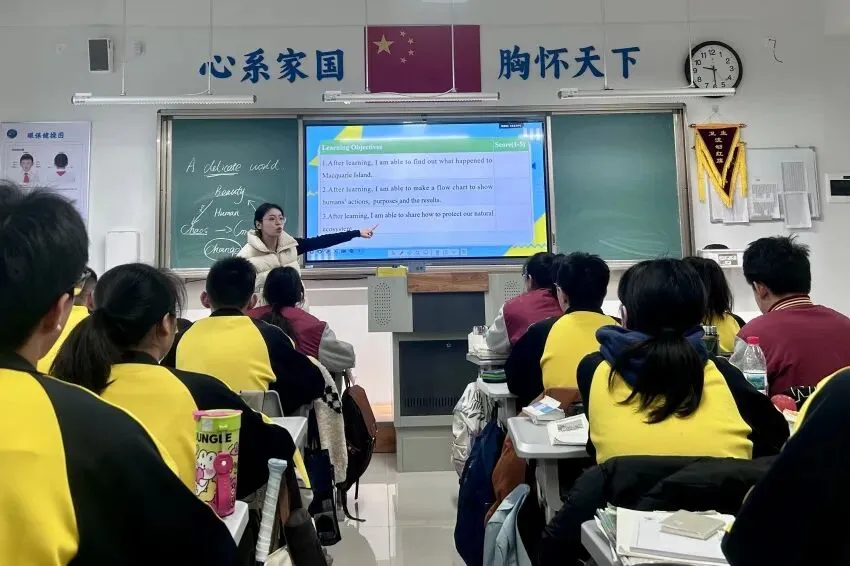
宋慧慧、陈晓茹老师围绕“人与自然”主题,践行“五育并举”理念,以情境教学夯实语言能力,同时引导学生思考环保责任,实现语言学习与价值引领的融合。
Teachers Song Huihui and Chen Xiaoru centered their classes on the theme of "Man and Nature", practicing the concept of " simultaneous advancement of the Five-sphere Integrated Education”. They consolidated students' language abilities through situational teaching while guiding them to reflect on environmental responsibilities, realizing the integration of language learning and value guidance.
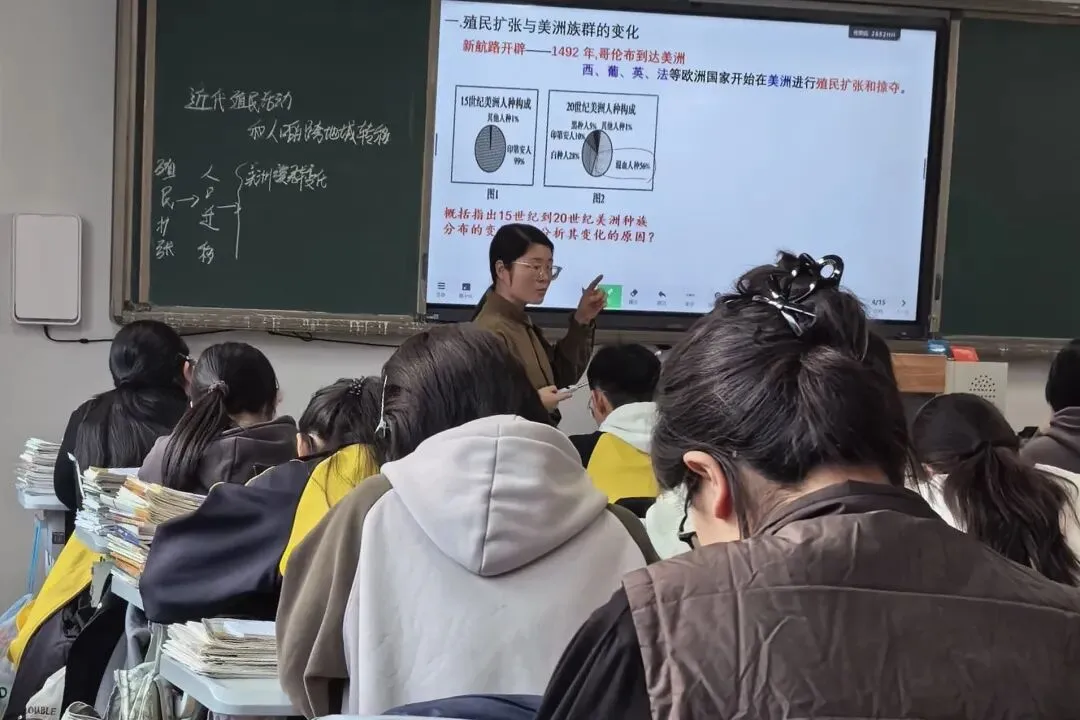
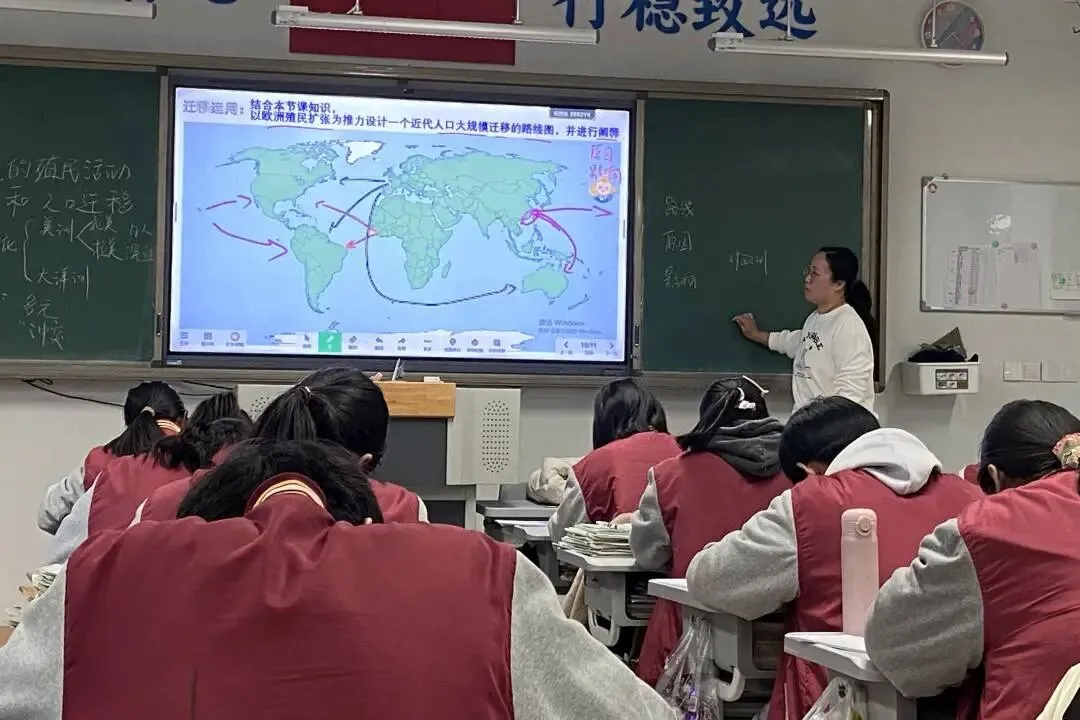
赵艳丽老师以课标为纲,借递进式问题与历史地图,凸显学生主体性,助力构建知识体系。闫兵老师融合必修与选修内容,依托史料搭建时空框架,深析殖民活动与人口迁移的关联。
Teacher Zhao Yanli anchored her teaching in the curriculum standards as the guideline, highlighted students' subjectivity through progressive questions and historical maps, and helped them construct a systematic knowledge framework. Teacher Yan Bing integrated compulsory and elective content, built a temporal and spatial framework based on historical materials, and conducted an in-depth analysis of the relationship between colonial activities and population migration.
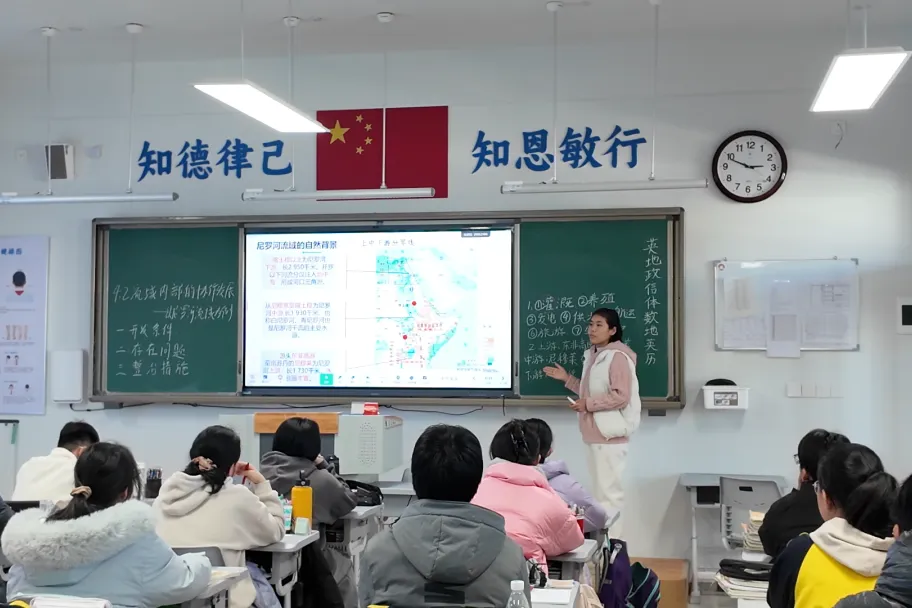
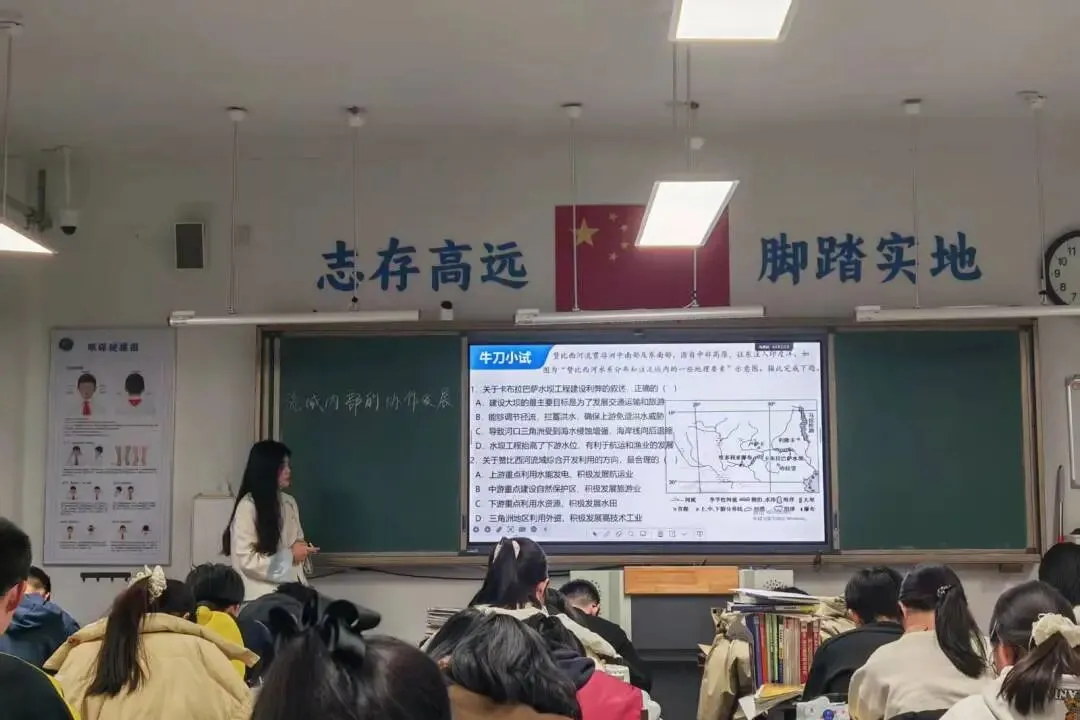
叶春会老师用思维导图搭建框架,结合复兴大坝等现实议题,培育学生人地协调观。车云凤老师以复兴大坝为切入点,跨学科探讨流域开发,彰显教学底蕴与智慧。
Teacher Ye Chunhui used mind maps to build a knowledge framework, combined with real-world issues such as the Grand Renaissance Dam, and cultivated students' awareness of human-land coordination. Teacher Che Yunfeng took the Grand Renaissance Dam as the starting point, carried out interdisciplinary explorations on river basin development, and demonstrated profound teaching insights and wisdom.
鲍胜波老师以议题式教学引导学生思考情法理关系,培育法治思维。孙铭悦老师通过情景剧场与模拟法庭,让学生在沉浸式体验中掌握法律知识,实现“教、学、做”一体化。
Teacher Bao Shengbo adopted issue-based teaching to guide students to reflect on the relationship among emotion, reason, and law, and fostered their legal thinking. Teacher Sun Mingyue used scenario-based plays and mock courts to enable students to master legal knowledge through immersive experiences, realizing the integration of "teaching, learning, and practicing".
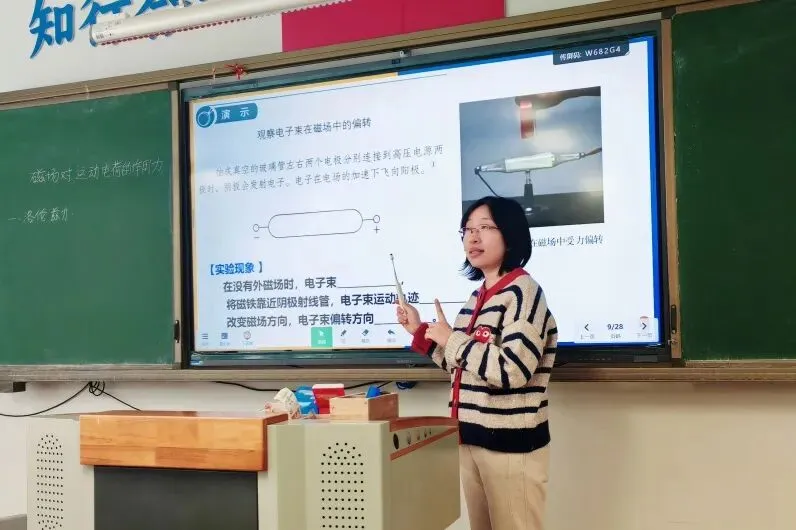
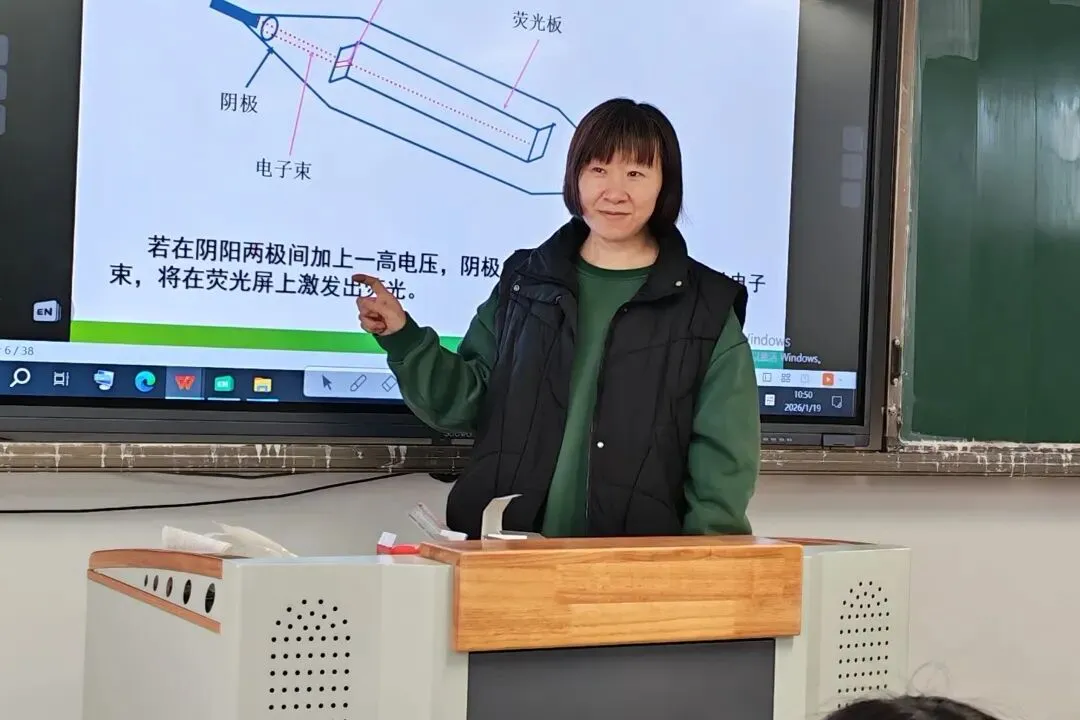
物理组王茜娜老师通过演示实验和亲手制作空间立体教具的形式,让学生将抽象的概念得以直观的理解和掌握。田兆芸老师通过展示flash动画以及科幻图片,将学生学习物理的兴趣推向了高潮。
Teacher Wang Xina from the Physics Group helped students intuitively understand and grasp abstract concepts through demonstration experiments and homemade 3D teaching models. Teacher Tian Zhaoyun showcased flash animations and sci-fi images, igniting students' enthusiasm for physics learning to a climax.
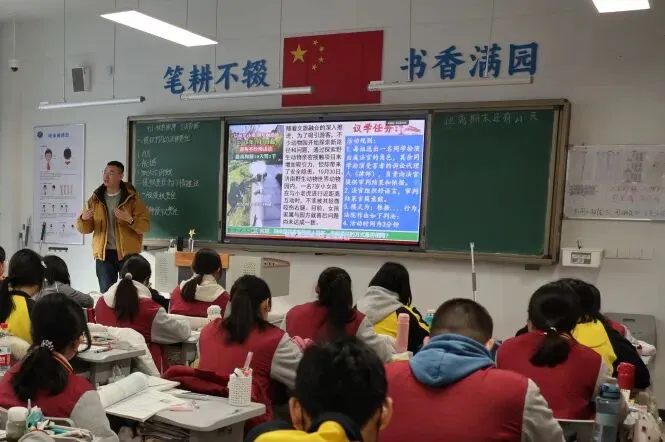
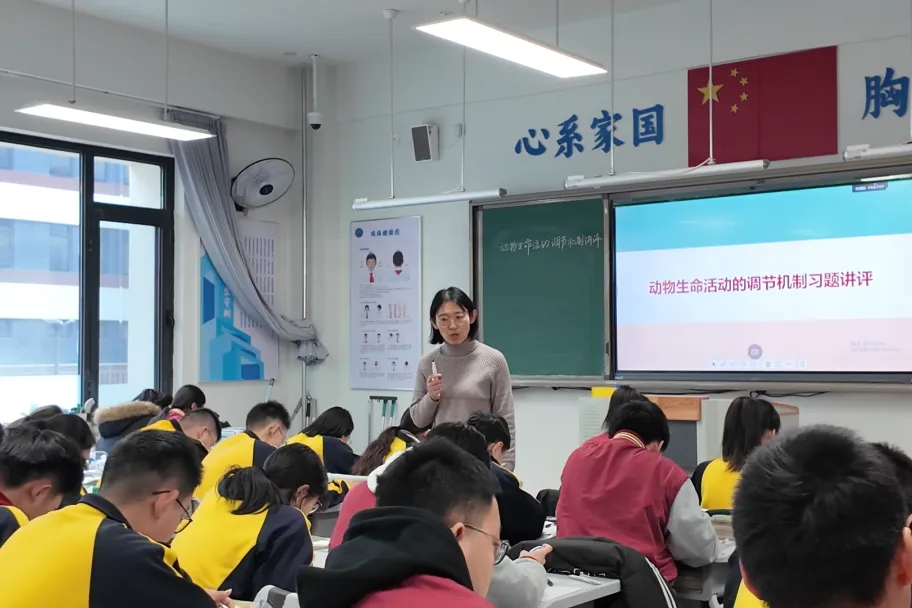
宫俊、吕晓红老师紧扣“动物生命活动的调节”,结合真实场景具象化核心考点。错题讲评时,两位老师引导学生析因补漏,实现知识巩固与思维提升的双重目标。
Teachers Gong Jun and Lv Xiaohong closely focused on the topic of "Regulation of Animal Life Activities", and visualized core examination points by combining real-life scenarios. During the error-analysis lectures, the two teachers guided students to identify the causes of mistakes and fill in knowledge gaps, achieving the dual goals of knowledge consolidation and thinking improvement.